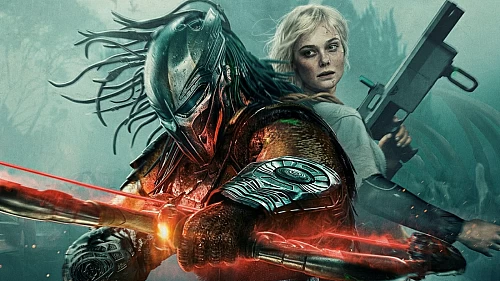

Across the Predator franchise, the Yautja are often perceived as a singular species defined by their advanced technology, ritualistic hunting culture, and strict honor code. However, as the series has expanded — particularly with Predators (2010) and The Predator (2018) — it has become increasingly clear that the Yautja are far from unified. Instead, they are divided into distinct factions, clans, and ideological offshoots, each with their own interpretations of what it means to hunt.

Traditionalist / Classic Predators
The earliest depiction of a Yautja in Predator (1987) presents what is widely considered the classic or traditional Predator archetype. This Jungle Hunter operates alone, stalking elite human soldiers through the dense jungles of Central America. Its behavior establishes the core tenets of Yautja culture: hunting dangerous prey, using cloaking and thermal vision to create a fair challenge, and adhering to a strict code of honor.

This same lineage continues in Predator 2 (1990) with the City Hunter, who adapts these traditions to an urban environment. Despite the change in setting, the underlying principles remain intact — worthy prey are targeted, the hunt is ritualistic, and certain individuals (such as the unarmed or pregnant) are deliberately spared.
These Yautja represent the Traditionalist faction — hunters who preserve ancient customs and view the hunt not merely as sport, but as a sacred rite. Their technology, while advanced, is used in service of ritual rather than domination. Even their interactions with humans hint at a deeper cultural framework, as seen when the elder Predator presents Lieutenant Harrigan with a ceremonial pistol, suggesting a long-standing acknowledgement of worthy adversaries.

The Lost Tribe
Also introduced in Predator 2 is the so-called Lost Tribe, a collective of Yautja who retrieve the fallen City Hunter at the film’s conclusion. This moment is critical, as it confirms that Yautja do not operate solely as lone hunters — they belong to organized clans with hierarchy, leadership, and shared traditions.
The presence of an Elder Predator, along with multiple uniquely adorned individuals, suggests a society built on experience and status. The Lost Tribe appears to function as a governing or overseeing body, ensuring that hunts are conducted according to established codes. Their intervention is not emotional, but procedural — retrieving their fallen hunter, acknowledging a worthy human, and departing without unnecessary conflict.

This reinforces the idea that traditional Yautja culture is not chaotic, but highly structured. Honor, lineage, and proven skill determine one’s place within the clan.
Super Predators
The most significant expansion of Yautja factional conflict appears in Predators (2010), which introduces a more aggressive and physically distinct group commonly referred to as the Super Predators. Led by the Berserker Predator, this faction differs dramatically from the traditional hunters seen in earlier films.

Larger, stronger, and more brutal in their methods, the Super Predators abandon many of the established rules of the hunt. Rather than seeking balance or fairness, they favor overwhelming force, psychological torment, and domination. Their use of attack hounds, trapping systems, and coordinated group tactics marks a clear departure from the solitary, ritual-driven approach of the traditionalists.
Perhaps most telling is their treatment of a captured Classic Predator, whom they keep imprisoned and tortured. This detail confirms that the divide between factions is not merely philosophical — it is openly hostile. The Super Predators view the traditional Yautja as inferior or obsolete, while positioning themselves as the next stage in the species’ evolution.

This faction represents a fundamental ideological shift: the hunt is no longer sacred — it is a demonstration of superiority.
Upgraded Predators
The Predator (2018) further complicates Yautja factional dynamics by introducing internal schisms tied to genetic experimentation and technological escalation. The Fugitive Predator, who arrives on Earth carrying stolen technology, appears to act in opposition to his own kind — suggesting the existence of dissent within Yautja society.

In contrast, the Upgraded Predator embodies a radical faction that seeks to enhance the species through genetic hybridization. By incorporating DNA from other species — including humans — this faction aims to accelerate Yautja evolution beyond its natural limits.
This represents perhaps the most extreme departure from traditional values. Where the original hunters relied on skill, discipline, and ritual, the Upgraded Predator’s faction embraces artificial enhancement and raw power. Honor is replaced with efficiency, and the hunt becomes secondary to survival and dominance.

The conflict between the Fugitive and the Upgraded Predator implies a civil war of ideology: preservation versus transformation.
Feral Predators
Introduced in Prey (2022), the Feral Predator represents one of the most distinct variations of the Yautja ever depicted on screen. Set in the early 18th century, this hunter arrives on Earth long before the events of the original films, offering a glimpse into what appears to be a more primitive or early-stage faction within Yautja society.

Unlike the technologically refined Jungle Hunter or City Hunter, the Feral Predator utilizes more rugged, less advanced equipment. Its bio-mask is skeletal in design, its weaponry more mechanical than energy-based, and its overall approach to hunting is notably more visceral. Rather than relying heavily on cloaking and calculated stealth, it frequently engages prey in direct, brutal confrontations.
This version of the Yautja appears to follow the same fundamental principles of the hunt — seeking out dangerous prey and testing its own capabilities — but with far less restraint. It methodically escalates its targets, moving from animals to increasingly capable human opponents, suggesting a learning process driven by instinct as much as tradition.

The Feral Predator may represent either an earlier evolutionary stage of the species or a distinct subspecies altogether—one less bound by the rigid honor code seen in later Yautja. Its behavior implies that the rules of the hunt, as observed in previous films, may have developed over time rather than existing as a constant throughout Yautja history.
A Species Divided — Honor, Power, and Purpose
One faction seeks to preserve tradition, honoring the ancient rituals of the hunt. Another seeks to dominate through strength, discarding rules in favor of brutality. Yet another aims to evolve beyond limitation, embracing genetic modification and technological advancement.
This internal conflict adds a new dimension to the Predator franchise. Humans are no longer the sole focus of the hunt — they are caught in the crossfire of a larger struggle within Yautja civilization itself.
As future films continue to explore this universe, it’s likely that these factions will become even more defined. What remains uncertain is which path the Yautja will ultimately follow: the discipline of their past, or the unchecked power of their future.
This article follows our editorial guidelines to ensure accuracy, canon consistency and ongoing updates as new information becomes available.
Published Mar 22, 2026 • Last Updated: Mar 22, 2026